
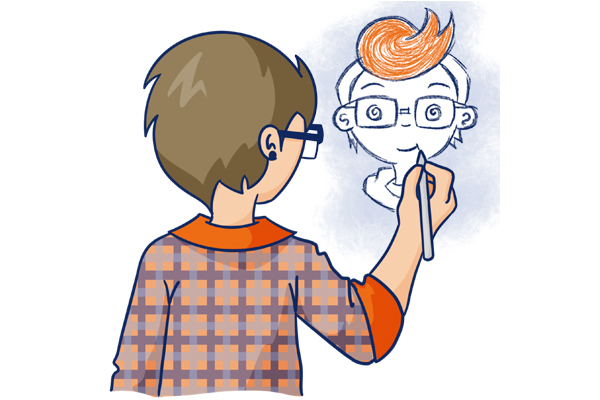
While I don’t work in Business Analysis myself, I read about it a lot, because I draw about it a lot. I do most of B2T’s graphic design work as a side hustle. Past enjoying the income, I’ve greatly enjoyed learning about the, often misunderstood, field along the way. This year’s series of AI implementation topics has struck a chord with me. In my day job, I work in a role that has been heavily affected by the introduction of AI. There’s a lot of concern about being replaced by AI – a concern that I’ve seen discussed a lot in the BA community too.
My concern came to a head not too long ago in a 1-1 with my team managers. These are biweekly, and always begin with the question “How have your past two weeks been?” Two 1-1s ago, I answered point-blank with a question of my own: “Is Customer Support getting replaced by Claude?”
It’s been an interesting season for us at my humble day job running Customer Support phones for a furniture company. The short version of this story is that we are almost comically understaffed. The slightly-less-short version is that we are far from the only team to be comically understaffed, but when orders go up in flames as the result of any department’s action or inaction, it falls on our plates.
We’re working on hiring, of course. But no matter how quickly we put a new warm body into a chair, it takes several more weeks for that warm body to be an independently competent team member. I’m sure anybody in any field can relate to this – from a new hire at the fast food joint to a new executive assistant. Training isn’t instant.
I happened across the knowledge that we were looking into Claude on accident.
It makes sense, really, for someone in my position to have been poking around in the world of “what can help us NOW?” It wasn’t a secret per se, but I stumbled upon the “Please verify your account!” email in an inbox I don’t normally check while looking for information one of my clients claimed to have sent me. Of course, I jumped pretty immediately to a rather dramatized sequence of panic:
- Why is this here?
- Is it because we’re failing?
- Does ownership think AI will do a better job than us?
- Is AI taking over our jobs?
- That’s it – it’s happening, and soon the whole world will be robots, and 2026 will be 1984.
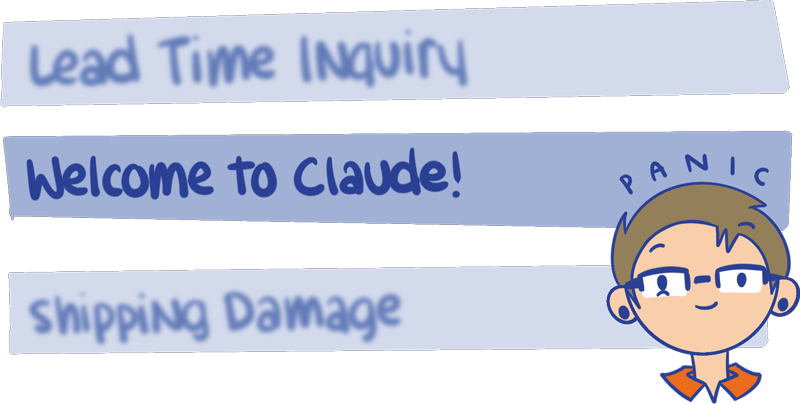
Obviously, the “Welcome to Claude!” email did not turn out to be the modern-day coming of Big Brother, but I’m glad I asked the question I asked. I’m glad to have had the conversation we had.
Our company is proud to have built a reputation known for working with real people. By this, I mean that customers can call and actually talk to a real person. I apparently have an uncanny phone voice, and get asked if I’m a real person at least once a week. I am always met with relief when I’m able to assure the caller that I am not just a “smart” AI voice. These AI representatives have gotten popular, and I even agree that they’re “better” than a litany of “If you are calling for your tracking, press 4,” but they lack a certain touch. Even if their voice sounds real, they’re still just listening for key words. If they catch “billing,” they might say “Sure, I’ll email your most recent bill in just a sec,” but that doesn’t help if you were asking to change your billing address. It’s not there yet.
I think I’m relieved that it’s not. I don’t know if I want it to be.
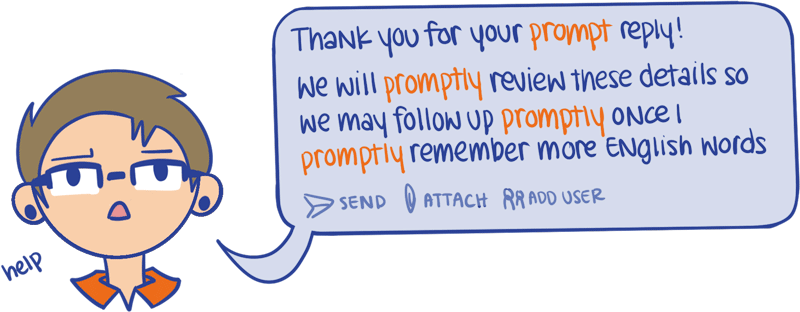
Similarly, I’ve become categorically opposed to having AI write my emails for me. I’ll own that I use canned responses – one can only type “Your replacement order has been submitted, and you should see its confirmation email in your inbox now!” so many times to so many people before losing it a little bit. What I don’t do is prompt ChatGPT or Claude or anybody else with a “this is the email a customer sent me; please craft a reply that is friendly but firm about the shipping timeline.”
Here’s the thing, though: I have popped over to ChatGPT when I’m writing a longer, more intricate follow-up, with requests like “I need a word that means ‘promptly’ but isn’t ‘promptly’ because I’ve used the word ‘promptly’ four times in this thing already.” I’m not immune to acknowledging that the extra hand is nice sometimes.
So, I was relieved when my team manager explained that they are experimenting with having Claude do things like triage and ticket summaries. They’re not looking for it to take over the job of human agents. That makes way more sense to me than the conclusion I jumped to when I first saw that account verification email.
Like all things – and like you’ve been reading all year in this series – there are places where AI works, and places where it doesn’t. I don’t think it’s at a place yet to handle the heftier cases I work, with live-wire customers and sometimes their spouses or colleagues.
I don’t want Claude to pretend to be me on the phone, no matter how good it is at emulating the voice of a “30-ish-year-old millennial with a laid-back tone”. I do a hefty amount of talking down and empathizing, often for several minutes at a time before actually diving into the order details. Those bouts of genuine conversation are what get us positive feedback scores on customer service – the “No, I get it; I had to coordinate travel around letting the carpet people in a few years ago and that alone was a nightmare – planning furniture delivery around that, too? Phew!” A bland retelling of any given order status update from a spreadsheet is just not the same. It could cross-check a phone number against an existing account, though, and filter a first-time low-value order versus a repeat VIP customer, and sort to general versus senior staff accordingly.
I absolutely don’t trust Claude to jump all the way into one of my tickets and know that you have to reply differently based on whether Amanda’s assistant wrote in versus Amanda herself. It could help with a summary bullet points, though, pulling from an email or call note – “6/29 provided a shipping update; chair delivering next week, loveseat still backordered.” For this, I think it would be really useful, and something it could do well.
I didn’t ask Claude to write this article for me, and didn’t even touch it for a grammar check. This did get a rewrite a few days after my original draft, which apparently sounded like the overly verbose ramblings of a semi-sane person who’d just logged off from a crazy Monday (um… busted) – but hey, doesn’t it read like it was written by a real person?
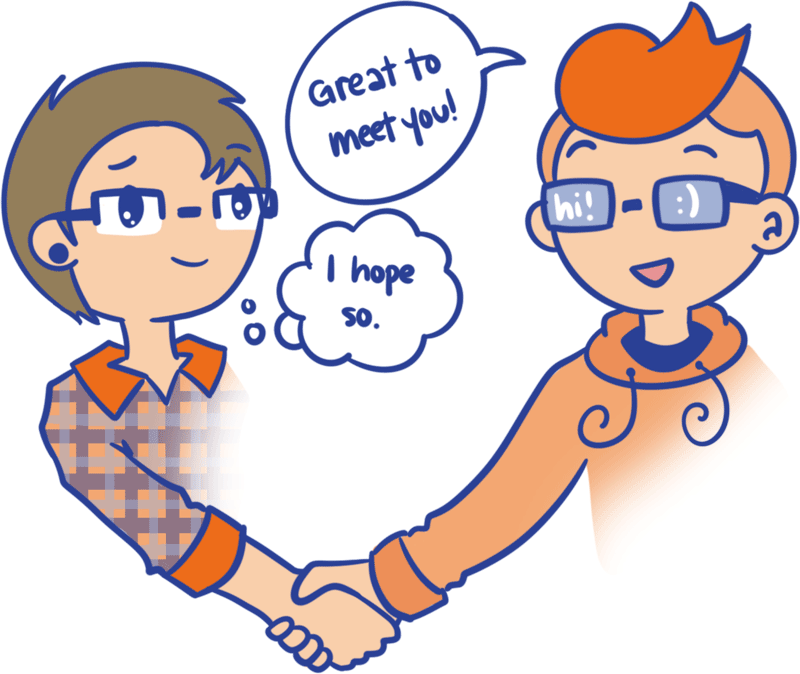
To tie it all back – I don’t think AI could do my job all the way, and I’m not sure that I’d want it to, but I can think about it like an assistant, or an intern, or an Aiden. It echoes the new-school implementations we’ve all been talking about for analysts! I’m all for asking Claude to summarize a meeting and highlight key decisions or even create a first draft of a model or diagram but for intricacies and empathy?
Here’s my challenge for you: think about what you do as a Business Analyst that can be replaced (or enhanced) by AI to accelerate your work without sacrificing quality. Then, be open to using it for these tasks so you can focus on the things that are best left to an actual human. AI is here to stay; we just need to figure out the best way to work together.
Business Analysis Proficiency Assessment Download
Our Business Analysis Proficiency Assessment can help you identify areas where you have strengths as well as those where you have opportunities to grow.
You still just can’t beat a live analyst. There’s a real-person touch that you can’t emulate without being – wait for it – a real person. And happily, I think most companies are seeing things the same way, even for roles that might initially appear to be opportunities to eliminate salaries.
Just something I’ve pondered while I sit on an entirely-too-fancy powered reclining chair. Whether or not I end up seeing Claude as a teammate at the ole 9-5, the employee discount on this little thing was pretty nice, so I suppose I’ll stick around to see what’s to come.

Max Cameron
Graphic Artist
Max Cameron is a superhero customer support representative by day, graphic artist extraordinaire by night. When not talking customers down off the ledge or bringing concepts to life for B2T, Max enjoys composing original music and seeing to the needs of two resident cat overlords, Charles and Penny.